

Research by Ropafadzo Tambara
Bitcoin developers building with Layer 2 face a choice right now: Ark vs Spark. And it’s not an easy one. Desperate times call for desperate measures, and scaling Bitcoin has written a classic dilemma into code. The decision to commit to either the steadfast, uncompromising partner who offers a lifetime of security, deep-rooted lineage, and shared core values (Ark) or a vibrant, high-performance journey of effortless flow, multi-asset abundance, and a collaborative, trusting community that makes everyday life feel exciting and seamless (Spark) becomes imminent.1
Both have one suitor in mind, Bitcoin Layer 2 ( Lightning ). They attempt to bypass throughput limitations of Bitcoin 1 Layer Base by making Bitcoin payments cheaper , faster and easier without waiting for developers to wait for soft-fork op-code changes, while having different philosophies on trust.2
A little backstory
Since the Mainnet launch of the Lightning Network in 20183, engineers have actively grappled with its fundamental constraints, particularly around inbound capacity and liquidity. While navigating these early parameters introduced operational friction, it has ultimately catalyzed the development of next-generation scaling solutions like Ark and Spark. In fact, we flagged Ark’s off-chain Virtual UTXO model back in 2024, before either protocol was mainstream.4
The integration with the Lightning Network as the undisputed Queen of Layer 2 scaling introduces a sophisticated, highly attentive partnership dynamic. Rather than a frictionless romance, it functions as a symbiotic system with strict operational bounds: mobile applications must perform continuous background checks to align with its liveness parameters, and the system relies on carefully structured, upfront capital to keep channels open. While its massive global utility is undeniable, managing routing paths and liquidity can feel like an intricate, high-stakes dance.
These requirements led to a specialization in Lightning Nodes and led to the development of Lightning Service Providers, which remain an integral part of both new protocols
To elevate this ecosystem, our research turns to two emerging paradigms, Ark and Spark, that seek to complement this foundation by offering alternative approaches to trust and functionality tradeoffs.
Meet Ark and Spark. Two brilliant newcomers and competitors for the heart of codebases and the capital of Bitcoin application builders.
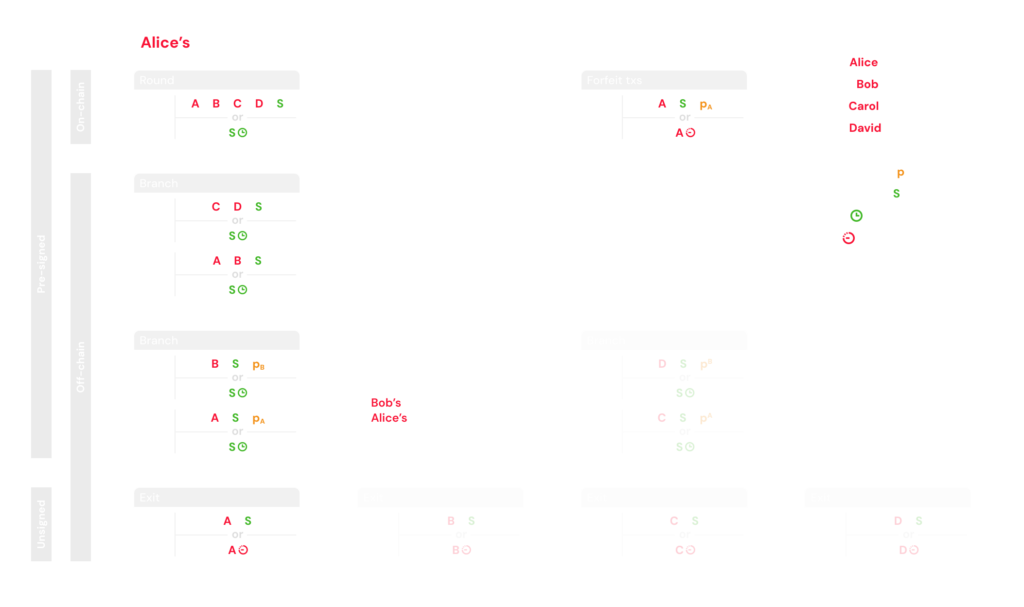
Ark : The partner who makes you sign everything
Originally proposed by developer Burak Keceli in May 2023, Ark acts as an add-on to the Lightning Network, beginning with a simple principle: users must retain a clear path back to Bitcoin ownership without requiring extensive trust in intermediaries.
In her presentation, Veronica Kuett, an Ark Researcher, stated that Ark helps to make Bitcoin programmable money.5 Ark operates as a community driven, decentralized and trustless L2 protocol for making off chain Bitcoin transactions without compromising self custody for programmers.
It coordinates cheap, private, and instant off-chain5 transactions using shared pre-signed transaction trees that are off-chain cryptographic structures. These transaction trees are used to distribute Unspent Transactions Outputs ( UTXOs ) and Virtual UTXOs (VTXOs), operating via an interaction of Ark Service Providers ( ASP). Transactions are periodically bundled and broadcast to the Bitcoin base layer as batching events called “ROUNDS”. During batching rounds, users can withdraw funds and escape the rigid cost of on-chain fees.6
Ark aims to deliver self sovereignty, without consensus soft forks and without forcing users to manage inbound liquidity profiles.
Ark demands every assert division agreement to be drafted before marriage begins, the result is close to Lightning’s trust minimized structure. She might not be exciting but she is predictable. Banks, coordinators and users are not spared from this insecurity, she trusts no one.7
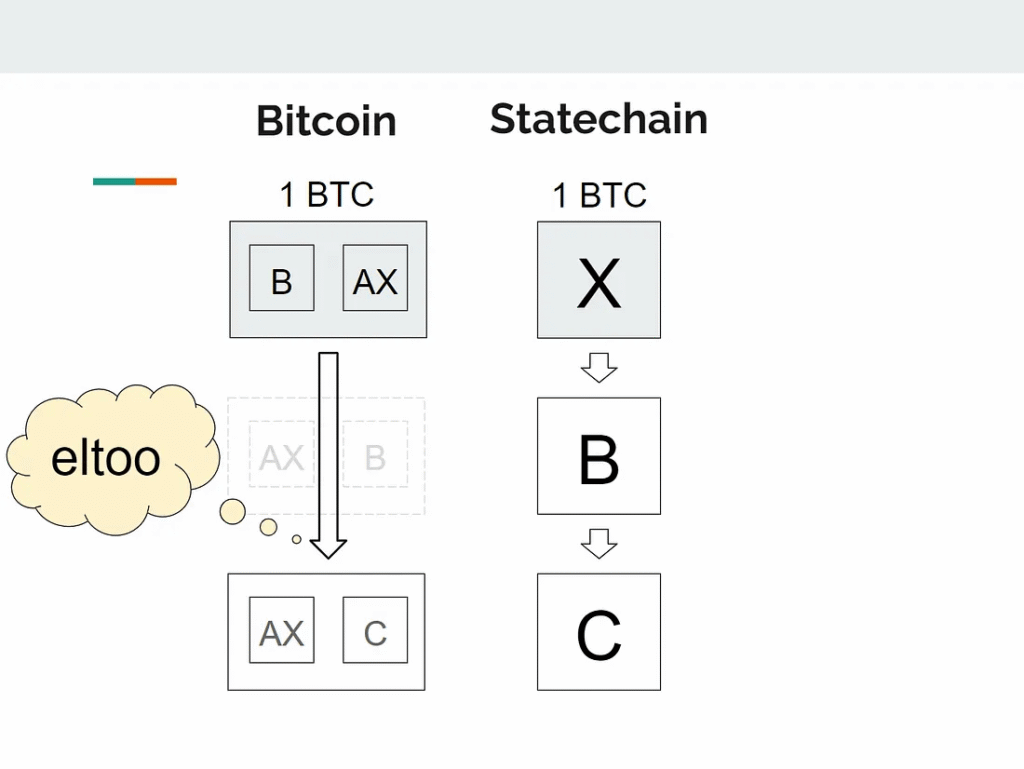
Spark : The charismatic youth
Spark aims to improve Lightning usability and performance. Unveiled in 2024 by David Marcus and the Lightspark powerhouse,8 it is unique for building on top of modified statechain architecture and advanced threshold cryptography, transforming Bitcoin into an enterprise- ready, multi-asset highway that natively supports stable coins whilst handling institutional compliance out of the box.9
It operates using statechain technology with FROST (Flexible Round-Optimized Schnorr Threshold) signing enabling free, instant transfers of Bitcoin and stablecoins like USDB, without requiring payment channels or liquidity management.10
She is an easygoing partner, supporting an open relationship and sharing a state management model with an address mathematically distributed between users and a federated peer-to-peer (P2P) network of independent nodes called Spark Operators (SOs). Spark Operators collectively make up the Spark Entity (SE)11.
Overall, the system reduces on-chain congestion whilst supporting a broader range of assets and applications. Arranging an elegant experience without worrying about the bill. Spark has a corporate credit card, high-tier venture backing and absolute zero tolerance for ideological purism.
The core similarities between Ark vs Spark: the honeymoon phase
To fully appreciate the design choices of Ark and Spark, we must first look at the foundational trade offs that they aim to solve. Both protocols were created to function as constructive responses to the capital efficiency and liquidity management bottlenecks inherent in the underlying Lightning Network architecture.
Ark and Spark have common vows: to sweep application builders off their feet by never having to buy inbound capacity again. The reliance on virtual asset allocations shields and protects the developers from brutal economic realities of the Bitcoin base layer. This allows both Spark and Ark to onboard millions of new users without locking up millions of dollars in stagnant channel liquidity.12
For Ark, the seamless flow is maintained through the neat elegance of Virtual UTXOs (vTXOs) distributed inside shared, pre-signed transaction trees. This delicate process involves the Ark Service Provider (ASP) to act as the ultimate liquidity shield, funding massive batch events called “Rounds” out of their own pocket so multiple participants interact instantly inside virtual mempools. However, with appreciation of its manner of abstracting away base layer complications for its users, there are explicit tradeoffs which include a reliance on trust ASP and potential reduced transaction privacy.13
On Spark’s side, the magic is driven by statechain abstraction and state-of-the-art FROST signatures. Instead of juggling channel balances, Spark performs slick off-chain key rotations. The underlying UTXO never physically moves on the blockchain, but cryptographic ownership changes hands inside a distributed federation in less than a second.14
In practice, a developer feels liberated with significant potential! Transactions moving at sub-second speeds, stablecoins like USDB flaw with ease, and the drama of failed routing paths feels like a distant memory successfully escaped.
However like every relationship, challenges are unavoidable. Both require a carefully designed exit strategy. With Ark, developers also have to contend with periodic VTXO refresh rounds, and Spark relying on security parameters and trust models of a federation.

Shared Features
True Offline Receiving
Through use of an asynchronous push payment utilizing their service providers, both Ark and spark achieve offline receiving. The interaction with the ASP (Ark Service Provider) and the Spark Entities as intermediaries between the user and the protocol remove need for Lightning’s liveness.Ark utilizes virtual UTXOs (vTXOs) and batched rounds, while Spark employs FROST signatures and statechain key rotation to ensure payments are secured for the offline recipient.15
Instant Onboarding
A key feature provided by both Ark and Spark is the capacity to facilitate instant user onboarding. Spark and Ark do not require a base layer blockchain transaction, they use off chain Ark ( ASP and VTXO)16 and Spark (SE and FROST signatures)17 to bypass the later challenge and allow wallets to work the millisecond they are downloaded.
Reliance on a service provider:
Trust Assumptions
Both Spark and Ark require additional trust assumptions compared to the Bitcoin base layer and the Lightning Network. They operate with reliance on service providers: the Ark (ASP)18 and the Spark (SE), a 2-of-2 signing model managing transaction liquidity and coordination functioning as a strict hub-and-spoke dependency.19 The moment intermediaries go offline or refuse to coordinate, the off-chain melody stops. To reclaim funds, users are forced to abandon the relationship entirely, triggering emergency fallback protocols to escape back to the base layer.
Even with these similarities, some important differences in the trust models of Ark vs Spark remain. With Spark, users rely on a 2-of-2 signing model where one key belongs to the user and the other belongs to the Spark Operators. Users keep their own keys, but finality depends on those operators deleting the keyshares held with previous owners. If all of them retained their shares and colluded with a previous owner, they could spend the user’s funds.
Ark’s trust model is uneven depending on the payment type, where finality depends on the round being confirmed on-chain, while out-of-round payments depend on either an honest sender or an honest ASP.
The Off-chain Batched Settlement Architecture:
Instead of broadcasting every single action that users do on the Bitcoin blockchain, both Ark and Spark operate in a batch mechanism enabling transactions to operate instantly off-chain. Operators bundle transactions to a single action that is posted to the Bitcoin base layer saving network fees and time.20
The covenant free Soft-Fork Status
The two developments of Ark and Spark prove to be 2 rebellious ladies refusing to wait in Bitcoin waiting rooms. They successfully bypass the scaling requirements of a consensus soft fork by fighting covenant opcodes like OP_CTV (BIP 119) or OP_CAT, which mathematically restrict how outputs can be spent.
They rebel against stagnation and operate on the base layer by hijacking existing battle tools and weaponize Taproot script. These hide spending conditions, Schnorr signatures for cryptographic efficiency, and complex trees of pre-signed transactions to build a functional scaling paradise.21

The cold reality: dispute resolution and exit mechanisms in Spark vs Ark
In the discipline of handling conflicts, Spark and Ark have diverse survival strategies.
Ark’s Meticulous and Timelocked Prenup
Acting with a strong defensive shield, Ark handles potential ASP failures through a pre-signed asset division contract prior to formalizing the relationship. If an ASP becomes non-responsive, the user executes a non-interactive unilateral exit, broadcasting a vTXO ancestral tree sequence directly to Layer 1. However a key constraint is the limitation that vTXOs expire within 20–288 cryptographic blocks. Failure of execution of a wallet software at a timely rollover of fresh rounds caused the ASP to reclaim the underlying liquidity. This imposes an operational requirement where client-side software must reliably manage silent, automated background refreshes to maintain the contract state.22
Sparks Council of Elders requiring a Trust-Fund.
Appearing like a conducive committee, Spark does not require a background liveness or rollover maintenance. The security allows communication, socialization and cryptographic manners using the 1/n shield distributed network of Spark Operators (SOs) . This allows giving attention to others whilst enduring the cold for 6 months safely. The model assures access and no malicious theft of capital funds at a single point of failure, provided there is honesty from the 1/n that refuses signing of fraudulent contacts.23
The trade-off is clear: Exchanging Ark’s uncompromising, math-enforced mathematical self-sovereignty for Spark’s distributed, peer-reputation model.
The Ark vs Spark tech stack explained
| METRIC/ TOOL | ARK PROTOCOL | SPARK PROTOCOL |
| Speed & Latency | <100ms deterministic state updates 25 | 50ms–150ms off-chain latency with zero fees for Spark to Spark transfers 24 |
| Throughput Capacity and Trust Model | 10,000+ vTPS via batched rounds at 100% Trustless Self-Custody (Pure Cryptographic Math) 26 | 15,000+ TPS via parallel signing at Minimized $1/n$ Distributed Federation Trust 27 |
| Live Apps and Ecosystem | Noah Wallet 28, Arké iOS Wallet 29 | Xverse (BitcoinFi) 30, Wallet of Satoshi |
| Available Integration Tools and SDKs | Bark SDK 31, a multi-platform core Rust library with UniFFI bindings for native mobile and desktop apps, and the Arkade-OS SDK 32, a TypeScript package used to build and manage self-custodial wallets via the Arkade Service. Together, they handle keys, transaction logic, and cryptographic identities securely on the user’s device | Breez SDK33: A free, open-source, and nodeless integration solution. It supports sending and receiving via Spark addresses, issuing and converting Spark tokens (BTKN), and maintaining USD stable balances, alongside native Lightning and stablecoin (USDT/USDC) interoperability. |
The Strategic Verdict: Selecting your Scaling Path
Ark
A builder is encouraged to commit to Ark if they are aiming for the uncompromising Bitcoin purist. This has autonomous machine networks with absolute, math enforced self custody being a primary product pillar. This means a product will not tolerate trusting any distributed federation with the transaction tree architecture.
Spark
As of the time of this writing (July 2026), Spark has a practical edge in ease of implementation. As such, it can be the go-to solution for projects looking for off-the-shelf Lightning capabilities, keeping in mind the trust tradeoffs that come with the platform.
Takeaways
In conclusion, while Spark moves down a commercial path optimizing for rapid consumer retail adoption, stablecoins, and seamless multi-asset performance, Ark is heading down a deeply technical path focused entirely on maximizing absolute, trustless self-custody and native Bitcoin scaling without middleman infrastructure.
One can attest there is significant potential growth in Layer 2 development. Ark provides a system ready for production for retail payments through use of ecosystems with support of Type-Script and Rust implementations. It is live and evident on platforms like Second Tech’s Bark Wallet.
On the other hand, Spark offers a token issuance mechanism, which supports state-chain UTXO transfers and a gasless stablecoin framework with Rust/ Go architecture.
References
- Ark and Spark: The Channel Factories We’ve Been Waiting For.
- Bitcoin Layer 2 Comparison: Lightning, Spark, Liquid, and More
- Lightning network ( History )
- Navigate Bitcoin’s Lightning Network in a New High Fee Era
- Arkade: An Execution Layer for Bitcoin-Native Applications | Project Spotlight
- Awesome-Ark-Protocol (A curated list of Ark protocol resources, libraries, tools and applications)
- Ark protocol
- Introducing Spark
- Statechains Explained: Off-Chain Bitcoin Transfers Without Payment Channels
- Layer 2 Comparison: Arbitrum vs Base vs Optimism vs Lightning vs Spark
- What is Spark? The Guide to Bitcoin’s New High-Speed L2
- Solving Lightning’s ‘Inbound Liquidity’ Problem Is Focus of New Layer 2 Bitcoin Protocol, Ark
- Bitcoin Layer 2: Ark
- Statechains Explained: Off-Chain Bitcoin Transfers Without Payment Channel
- Async payments
- S14 E1: Burak Keceli on Ark & Bitcoin 2nd Layers
- Statechains Explained: Off-Chain Bitcoin Transfers Without Payment Channels
- Ark: Offchain Transaction Batching in Bitcoin
- Lightspark Sync 2024: Introducing Spark | Kevin Hurley
- Spark & Ark: The Next Generation of Bitcoin Layer Twos | Bitcoin 2026
- Understanding the Bitcoin Taproot Update
- Ark protocol
- Welcome to Spark
- Ark Protocol: Shared UTXOs and Virtual Channels for Bitcoin
- Blockchain Speed Comparison: TPS and Finality Across 15+ Chains
- Ark: Offchain Transaction Batching in Bitcoin
- How Bitcoin L2s Lightning, Rootstock, Spark and Liquid Interact
- Noah: trust-minimized Ark Wallet
- Arké – a bitcoin iOS app based on the Ark protocol prototype by Second.
- Xverse App
- Bark SDK overview
- Create your own Wallet, built on Arkade
- Breeze SDK Spark